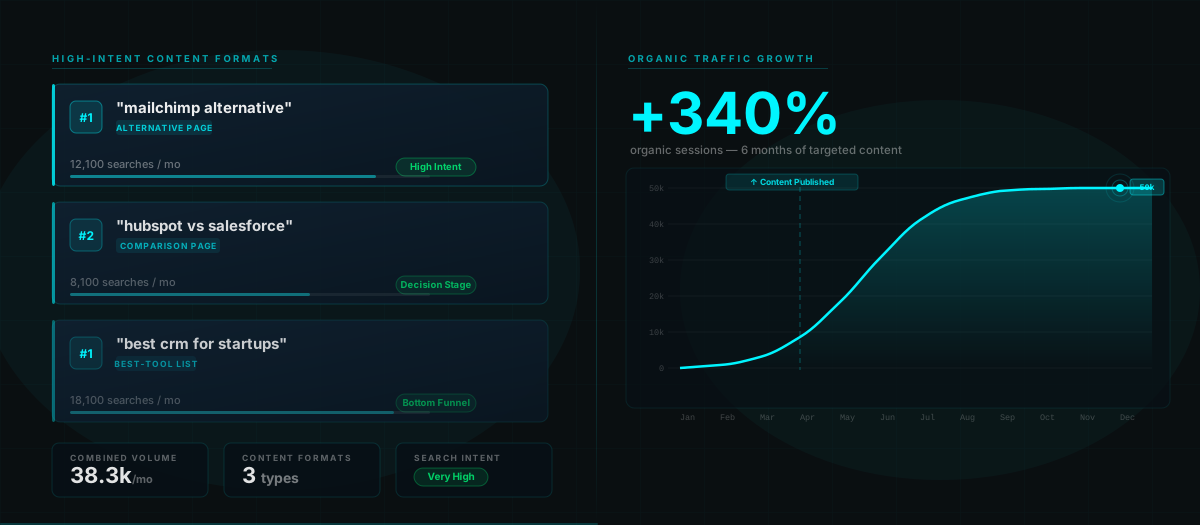
The main reason many startups, SaaS and B2B companies begin producing content is to raise awareness and position their brand as an authority in their space. That's a perfectly good reason — but it's only part of the picture.
The most effective B2B content strategies I've worked on have one thing in common: they target people who are already close to making a buying decision. These are high-intent searches, and two formats in particular are exceptional at capturing them.
'Alternative to' and comparison pages
When someone searches "Mailchimp alternative" or "best Mailchimp alternative for ecommerce", they've already decided they want email marketing software — they're just not sold on the market leader. That's an incredibly valuable moment to be present.
Sendinblue (now Brevo) is a great example of this done well. They built a series of highly targeted competitor comparison pages that rank directly for these alternative searches. The result? Organic traffic from people who are actively evaluating tools, primed to convert.

The key to making these pages work is honesty and usefulness. Don't just write a one-sided puff piece. Acknowledge what competitors do well, be specific about where your product wins, and speak directly to the pain points of someone frustrated with the alternative. That combination builds trust and converts.
'Best tools' and 'top software' roundup content
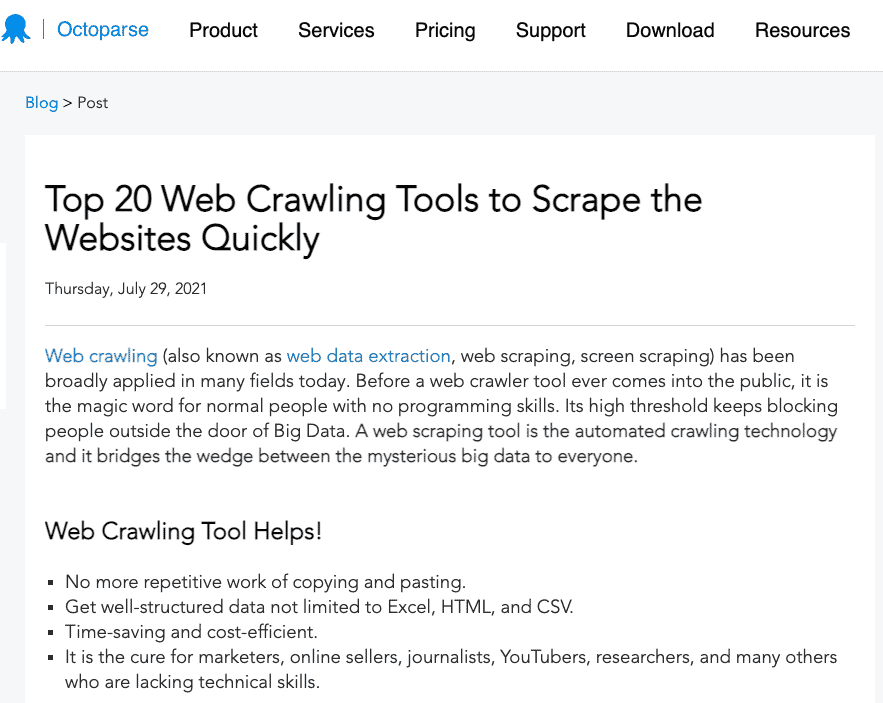
The second format worth investing in is the roundup — articles like "Best web scraping tools" or "Top 10 email marketing platforms for small businesses." These rank for informational searches from buyers at the research stage, and getting your product featured (or building your own) can be extremely valuable.
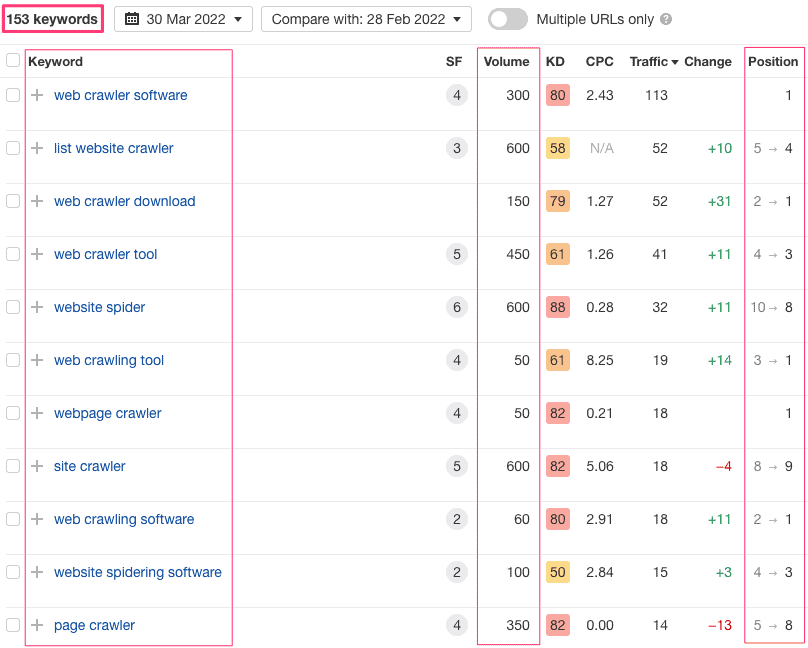
Octoparse, a web scraping tool, is a good case study here. By targeting keywords like "best web scraping tools" and "data extraction software," they built organic visibility that brought in relevant, qualified traffic — the kind of users already looking for exactly what they offer.
The underlying principle
Both content types work because they meet users at high-intent moments — when someone is comparing options, evaluating solutions, or ready to switch providers. This is fundamentally different from purely awareness-driven content, which requires far longer nurture cycles to convert.
If you're a startup or B2B SaaS company with a limited content budget, I'd argue these formats should come before thought leadership pieces. Get visible when people are ready to buy, then build your brand authority around that foundation.
Want to talk through a content strategy for your business? Get in touch — I'm always happy to have a no-obligation conversation.